
Australian Breeds: Kelpie, Heeler, Terrier
An Australian kelpie suits an active home only if the activity is daily and structured. The breed was built to move stock over distance and to take direction at speed, so a household that offers a hard run, a job or a sport most days will get a settled dog, while a household that offers a weekend outing will get a dog that invents its own work. The same rule applies to the heeler and, in miniature, to the Australian terrier: these are working animals first, companions second.
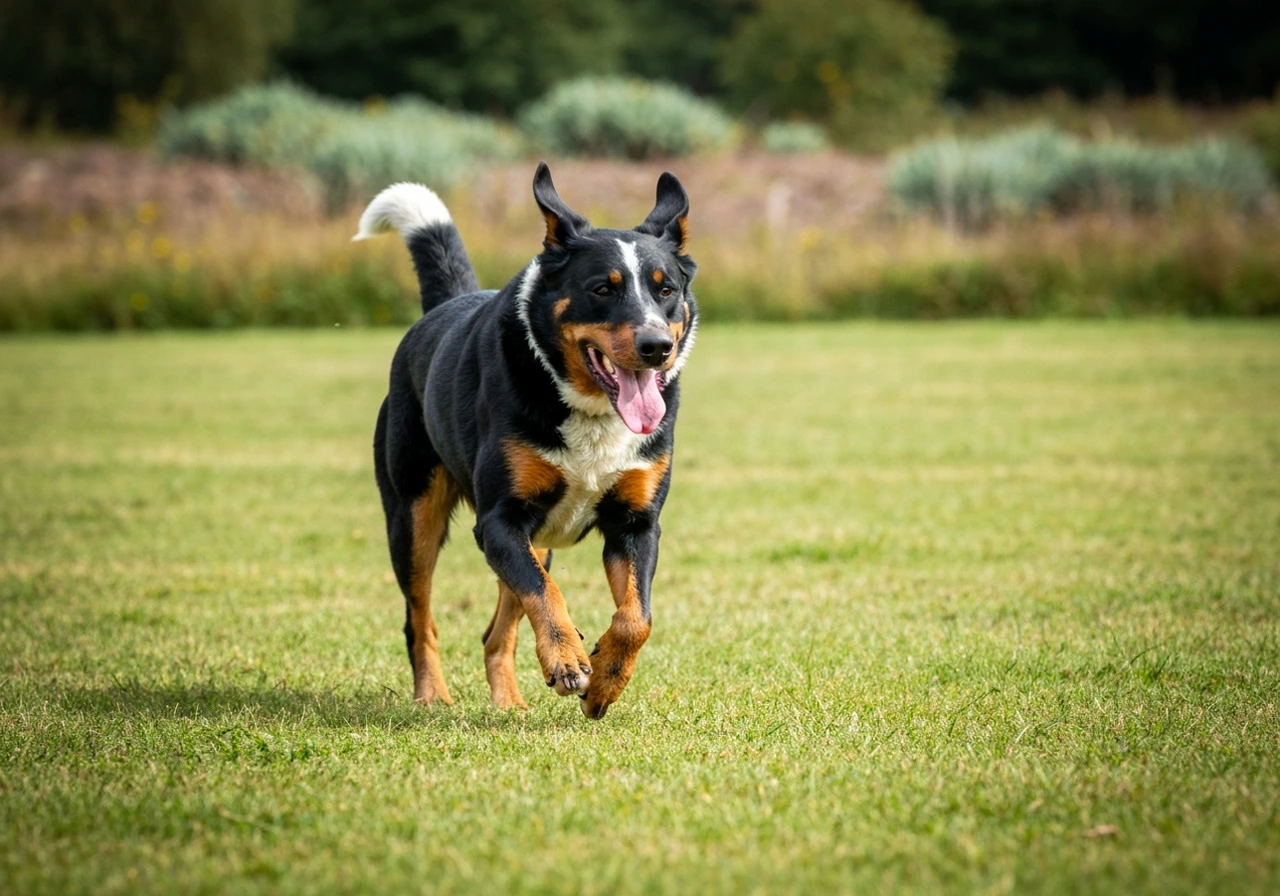
Is an Australian kelpie a good dog for an active home?
Yes, with conditions. The kelpie is a herding breed from the Australian sheep and cattle country, and its working style is to cast wide, drop low and move stock with eye and position rather than force. That style produces a dog with high physical stamina, strong responsiveness to a handler and a low tolerance for idleness. An active home is a good match when the activity has rules. Running beside a bicycle, obedience, agility, flyball, treibball or actual yard work all give the dog a task and a direction. Free running in a park does not, because the dog is not being asked to do anything with its speed.
Three practical points decide whether the match works. First, exercise volume: most kelpies in pet homes need at least an hour of real work a day, and many need two sessions. Second, mental work: short training sessions, scent games and problem solving tire a kelpie faster than distance alone. Third, containment: kelpies jump, dig and climb, and a fence that holds a labrador will not necessarily hold one. Homes with small livestock, poultry or cats need to plan for the herding instinct rather than assume it will not appear.
For readers weighing the breed against their own routine, a plain australian kelpie breed profile written for Australian owners is a reasonable starting point, because it deals with the climate, the yard sizes and the local rules that shape day to day ownership here.
What is the difference between a blue heeler and a red heeler?
The difference is coat colour, and colour is the only difference that matters for breed identity. The blue heeler and the red heeler are the same breed, the Australian cattle dog, recognised under one standard. Blue describes a black based coat with white and tan markings, usually with a mottled or speckled pattern on the body. Red describes a coat built on a red or liver base, again with white and tan markings and often with speckling. Both carry the same body, the same head, the same working gait and the same temperament.
The colour question persists because working properties were once attached to it in yard talk, and because the two colours were bred in separate lines in some districts. Registry practice does not support separate breeds. A cattle dog is registered as a cattle dog, and the colour is recorded as a description. Buyers who are told that one colour is harder or softer than the other are being told a line of a particular kennel, not a fact about the breed.
What does separate cattle dogs is working style and bite. The breed was developed to move cattle that kick and lean, and it works close and low, using heel and shoulder bites to shift a stubborn beast. That is why the standard calls for a compact, muscular dog with a broad skull, strong jaws and a gait that is free and tireless rather than flashy. A heeler that is sound in mind and body will be reserved with strangers, protective of its territory and intensely bonded to its handler. Those traits are the breed, not a fault, and they are the reason a heeler in a small suburban yard without a job is a common source of complaint.
Is the Australian terrier a good small dog for town or farm?
The Australian terrier is the most adaptable of the three for a small block, provided the owner accepts terrier behaviour. It is a small, sturdy, rough coated dog, developed in Australia to work around farms and homes as a ratter and a watchdog. It is alert, quick, confident and inclined to chase small moving things. In town, that means a secure fence, a lead outside the yard and early work on recall around birds, cats and rodents. On a farm, it means a dog that will clear rats from a shed and announce visitors without being asked.
Its size makes it practical for smaller gardens and for renters who can keep a dog, and its coat sheds little compared with the larger working breeds, though it needs regular stripping or clipping to stay healthy. It is not a lap dog in the sense of a breed that wants to be carried. It wants to patrol, investigate and be included. Households that want a quiet companion for a sedentary routine should look elsewhere, because a bored terrier will bark, dig and patrol the fence line.
Compared with the kelpie and the cattle dog, the Australian terrier asks for less distance and more vigilance. Its exercise needs are moderate, but its need for stimulation and for boundaries is not. Training should be firm, brief and consistent, because the breed is intelligent and will test a soft handler. With children, it does best in homes where interactions are supervised, as with any small dog.
What these three breeds have in common
All three were shaped by Australian conditions rather than by show fashion. The kelpie by the need to move sheep across large, dry paddocks. The cattle dog by the need to move half wild cattle in timber and scrub. The Australian terrier by the need for a small, tough dog around the house and the sheds. That shared origin produces three traits that appear in every profile: stamina, independence and a strong response to a handler who is worth following.
It also produces a shared warning. None of these breeds is a good first choice for an owner who wants a dog that settles without being given a role. The kelpie and the cattle dog in particular are surrendered or rehomed at high rates when their exercise and training needs are underestimated. The terrier is easier to keep but quicker to develop nuisance behaviours when it is left to fill its own day.
Choosing between them
Match the breed to the property and the routine, not to the photograph. A kelpie needs distance, direction and daily work. A cattle dog, blue or red, needs a job, a firm handler and secure containment. An Australian terrier needs a small territory to patrol, consistent rules and a household that tolerates barking. Where those conditions are met, all three are capable, long lived working dogs. Where they are not, the breed will tell you quickly, and usually at the fence line.
Buyers should ask breeders about working lines, hip and elbow screening where applicable, and the parents' temperaments, and should ask shelters about the dog's history with stock, cats and children. A trial period, a secure yard and a plan for daily work matter more than the colour of the coat or the reputation of the breed on paper.